A couple ofSome months ago, I published a game I’m really proud of, FanX, which you can get here. It’s a game of vampires and it focuses on navigating an hostile social environment (we call it “social dungeoneering”). But this is not, in fact, a post simply shilling the game. Some time after the game was published, someone played it and wrote a review (in Italian). Some time afterwards[1] I found and read it. Internet is a wonderful place, isn’t it?
One of the point of the review was that the game lacked examples. Which is true. Me and Dada both playtested the game extensively. I’ve written, in other places (and also in Italian) a lot of recaps[2], but they never made it to the manual. Mostly because I skip those parts when reading a manual and thus I never thought people would actually want them. So I thought, what about writing them here, with some reasonings to show the thought process behind the choices I make as a GM[3]?

I’m going to write a couple of posts on this, called “Playing FanX”. They are not to be meant a guide to actually playing the game. There’s the manual for that. Rather, the idea is show how I play and my reasoning behind the choices I make as a GM. You can disagree with them. You should make your own choices.
One last note before we begin: I usually blog in Italian, but FanX is written in English, so I chose to write these posts in English because (a) I can assume anyone who read FanX is comfortable with reading a couple of pages of English text and (b) I can’t assume everyone who read FanX is comfortable reading a couple of pages of Italian text[4].
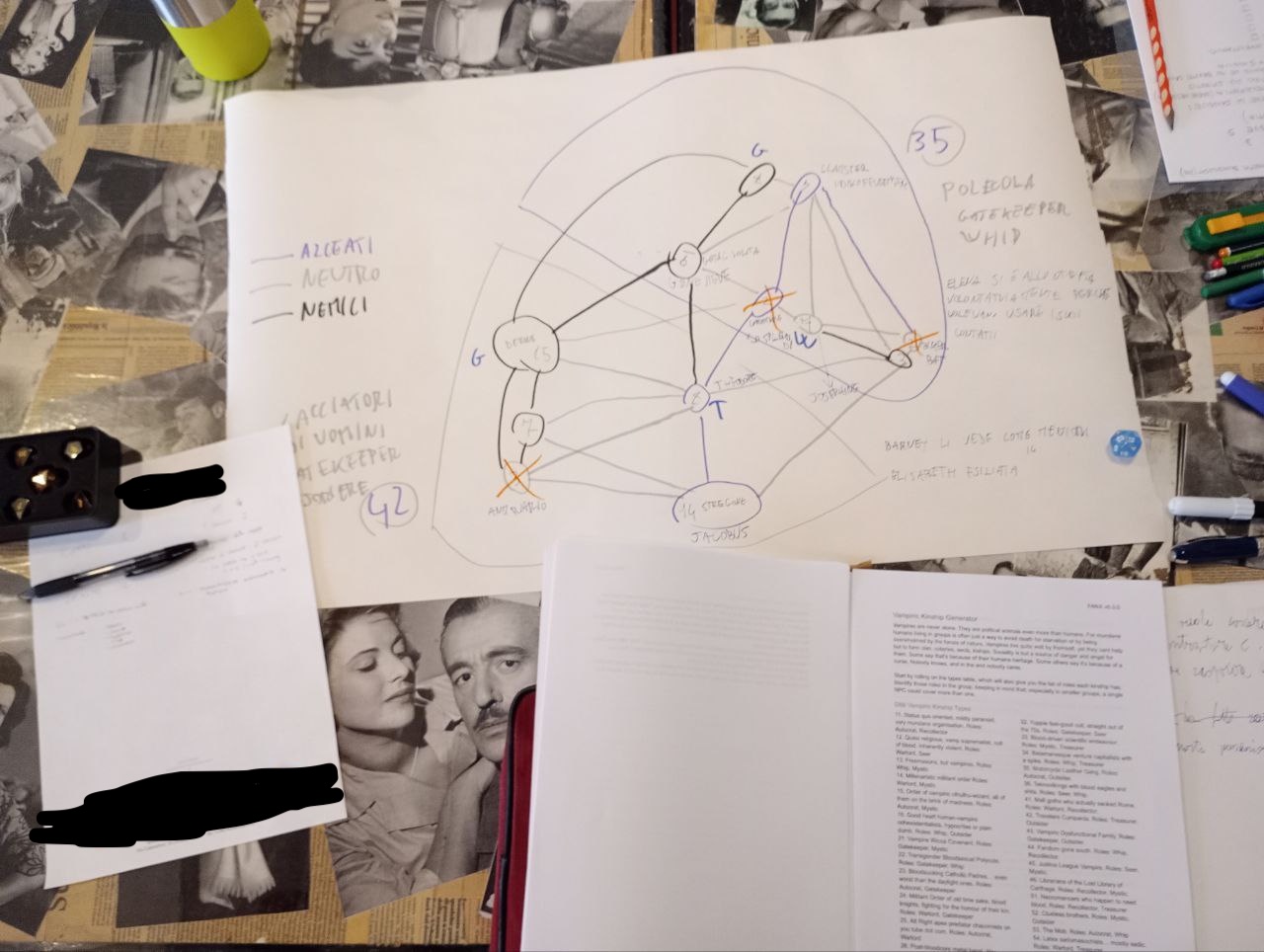
The first step of a new game of FanX is the creation of the relationship map, so this first post will cover exactly that. Due to the need to make the whole thing easy to put into a picture, I’ve used a simple A4 sheet with just a handful of die. What we’re aiming for here is a very small city, for a one-shot game with 3 players.
I like players to have a hand here, throwing the dice. It helps to get them involved, but also gives more entry points to the dice, which helps to make the map more spread out.
The Dice Drop
Selecting the dice
Choosing how many and what dice to use is something left to the fantasy and taste of the group. The manual suggests 3-5 per player and gives some hints about how to choose them. Here are some expanded considerations borne from experience:
- Dice size only binds the upper power limit of your map. Every dice has a ‘1’, so even rolling only d20 might end up in a low power situation. Unless you really want to pull the city in that direction (which is basically an esthetic choice I suggest to take with the players - and to re-take at every new game), mix them liberally. If you only want Vampires, stop at d12. Again, it’s a matter of preference.
- Since every dice is an NPC, the number of dice matters. The manual suggests 3-5 dice per player, which is sensible, but can get you a lot of NPCs if you have a big party. In that case, try to stay on the lower end of the spectrum, even going as low as 2. Don’t limit yourself to 1 NPC per PC, it’s going to be boring. If you want a more sparse map, maybe for a long-term game, pick as many as you want.
- With all of this said, the most fun way to do it is to simply plunge your hand into a big bucket full of random dice, pick a handful up without looking and throw them at the map (just try not to throw them too hard or you’ll end up chasing dice across the floor). If you enjoy showing off and have enough space on the map (or a small enough bucker), outright pouring the bucket on the map tends to get you everybody’s attention. Apply maniacal laugther to taste.
In this case, I picked 4 dice per PC. I could have used 5, but the space was limited. Had I used two sheets, or a bigger format[5] I would have used more dice. A couple of times I had to reduce the dice due to the table size. Available surface is a constraint in this phase, although you could always use the ground.
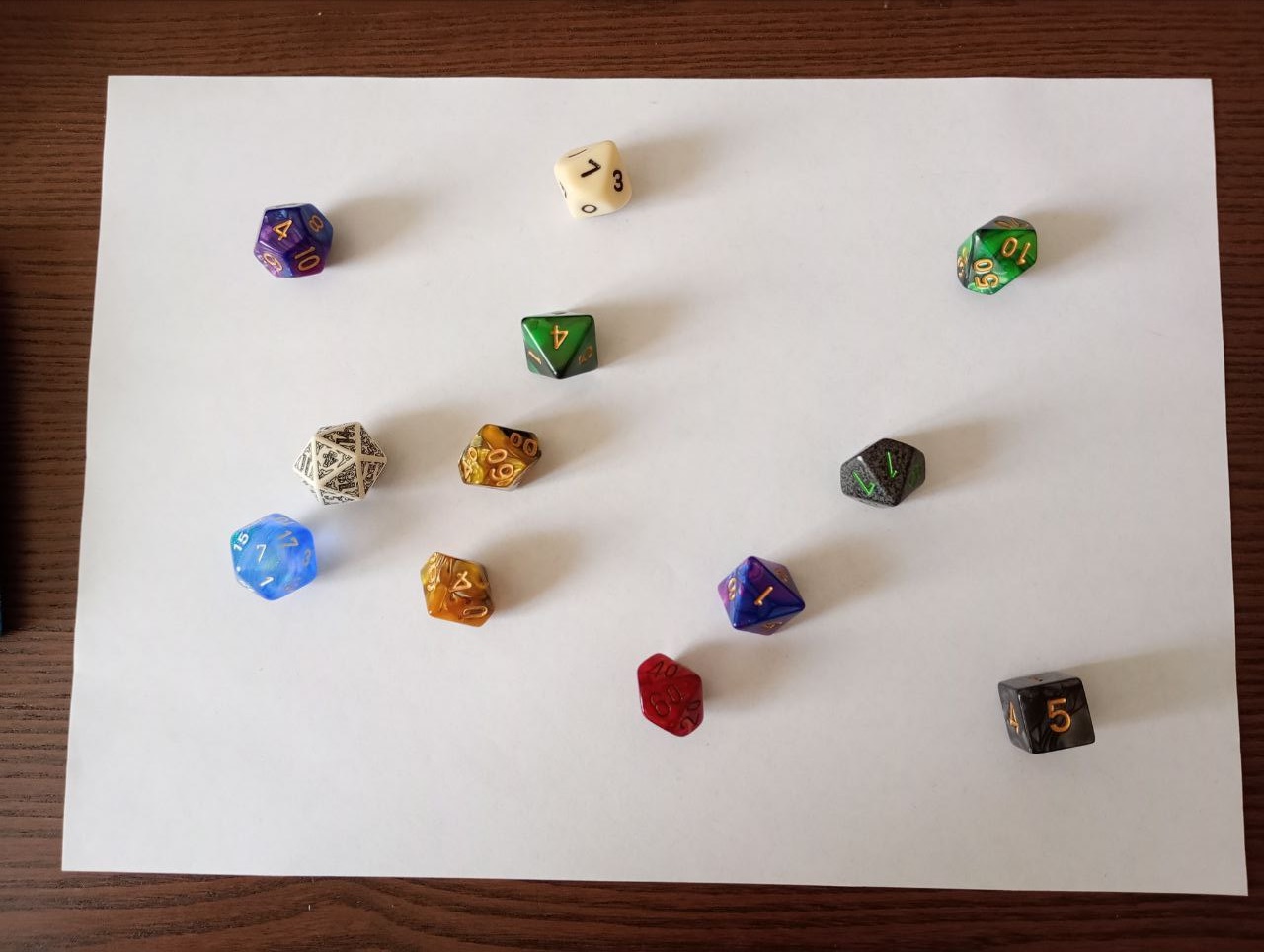
This gives us a dozen of NPCs. They might seem a lot for such a limited scope, but not all of them might come into play and I don’t know beforehand which ones will do it, so I tend to keep some spares. Sometimes, you can already see the hint of groups or alliances here, but this doesn’t look like the case. Don’t worry, as you add information to the map, things are going to get clearer.
The next step is basically to replace each dice with the number. Not something really woth a picture. It’s also something I always involve the players in, because otherwise it sucks up time and gets tedious to do.
Connecting the dots
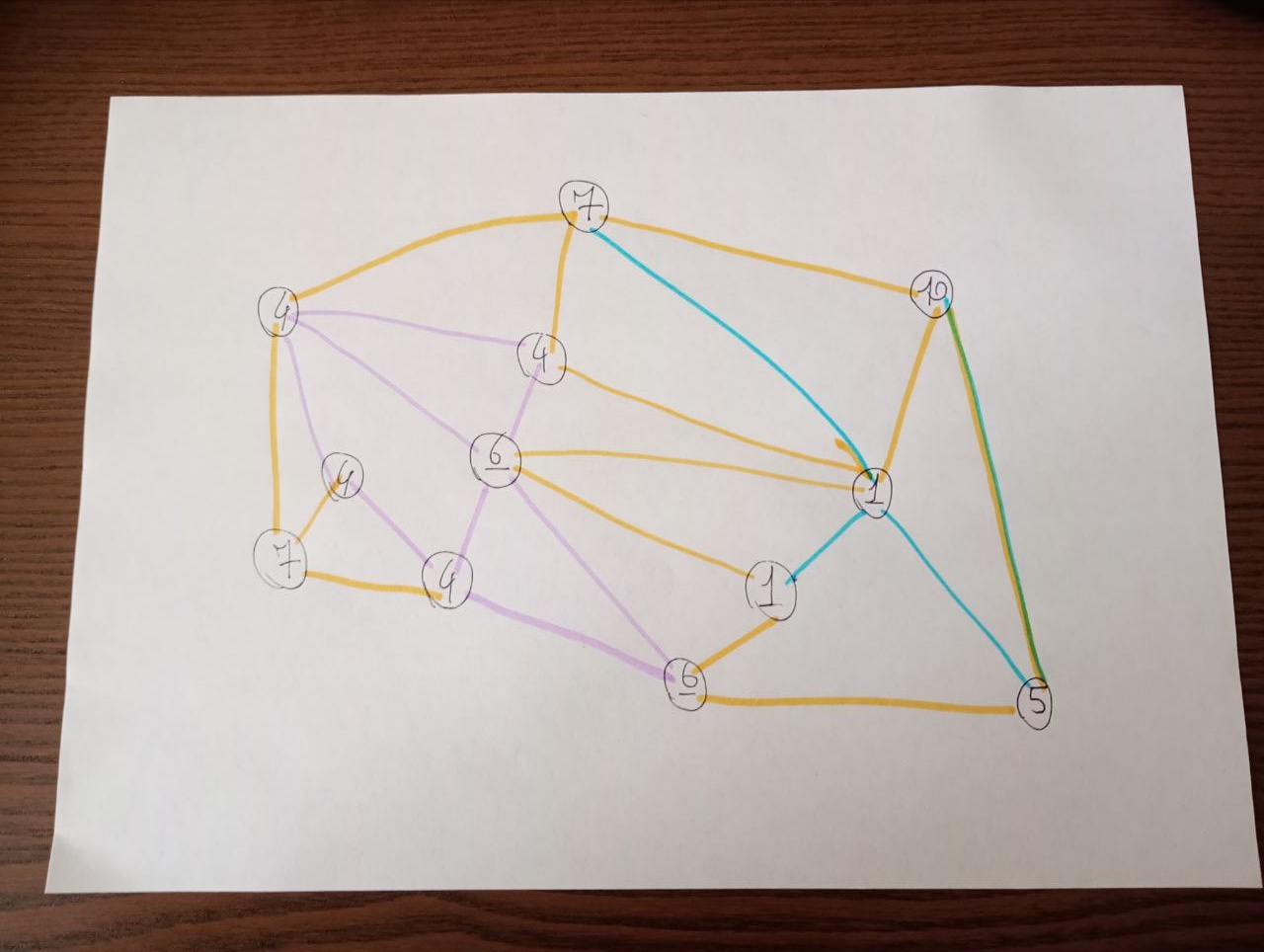
I don’t have the right colors for the connections[6], so I’ve replaced them with what I could find, so it works like this:
- Violet-ish is for purple connections (friendly)
- Yellow for grey connections (neutral)
- Blue for black connections (enemy)
As you can see, I’ve made a couple of mistakes: the green line is actually blue (odd to odd), and there’s some leftover of another wrong yellow line nearby. My rule of thumb in these cases is that anything that gets caught before we start to play gets fixed, after we start playing, they’re some weird coincidence. The aim of the procedure is to create a skeleton of a society, to fill in and explore during the game, without spending too much time on it. Strict adherence is not important - in fact, you could replace the whole procedure as long as you end up with a similar set up by the start of the game. Without the social web, FanX cannot work, but it doesn’t really care about how you create it.
The procedure gives you some leeway. For example, I could have added more connections to some of the nodes without breaking any rule. I chose not because I like to leave some uncharted relationships in my maps whenever possible. Remember, the map shows what everybody knows the world is, which might not be what it actually is. Some unplotted stuff adds mystery and gives you some space to add secrets to the social relations in your city. You don’t need to do this and especially to force it, but if you see an NPC with a lot of possible connections, skipping some might be more valuable than noting them all.
Going deeper into the connections
I’m copying here a comment I made on the game’s page, responding to a question. I’m going to rephrase it a little bit and expand on it, because it can be useful to understand how we developed the game and what’s the purpose of this part. You don’t really need to dig into this part, but if you have questions about the even/odd rule, this is were they’re most likely to be addressed.
Yes, it’s actually odd to have NPCs which only have enemies or allies with very little in between, but the oddness is wanted because it interacts with two other key elements of the game:
- The map shows what’s publicly known. An NPC might appear as a well-loved member of community, but actually be secretly resented by the NPCs further from them in the map (or vice versa). Hidden enemies and allies lurk in the shadows like wandering monsters or traps in a dungeon and the PCs might get caught on those (or maybe they can discover this information and use it for their gains)
- At the start of the game, the PCs are very low on the social ladder, basically on the ground. They’ll have to use the information they gather (from the map and during play) to better their situation. This system is skewed to produce two topologies (more often than not combined in the same map - but we had a couple of outliers and they were fun to play as well) which are more usable to this end: a tightly-knit group of friends and an infighting mess.
In the end, the aim of the whole setup is to create an unstable situation the PCs can exploit in some way, not a stable situation someone can comfortably (un)live in. During the game the map will change (NPCs get killed, outed as traitors to their friends, enter new alliances and such), possibly leading to a more stable state (although not always, I’ve seen groups which aimed at creating further mess in order to profit out of it). The weirdness of the initial set up is volountary: a stable, well-functioning society can deal with most of threats in the “Incident” table fairly easily, without giving an opening to undesiderables such as the PCs. If you want your game to work, you’ll need disfunctionality and instability across the board.
Forming the groups
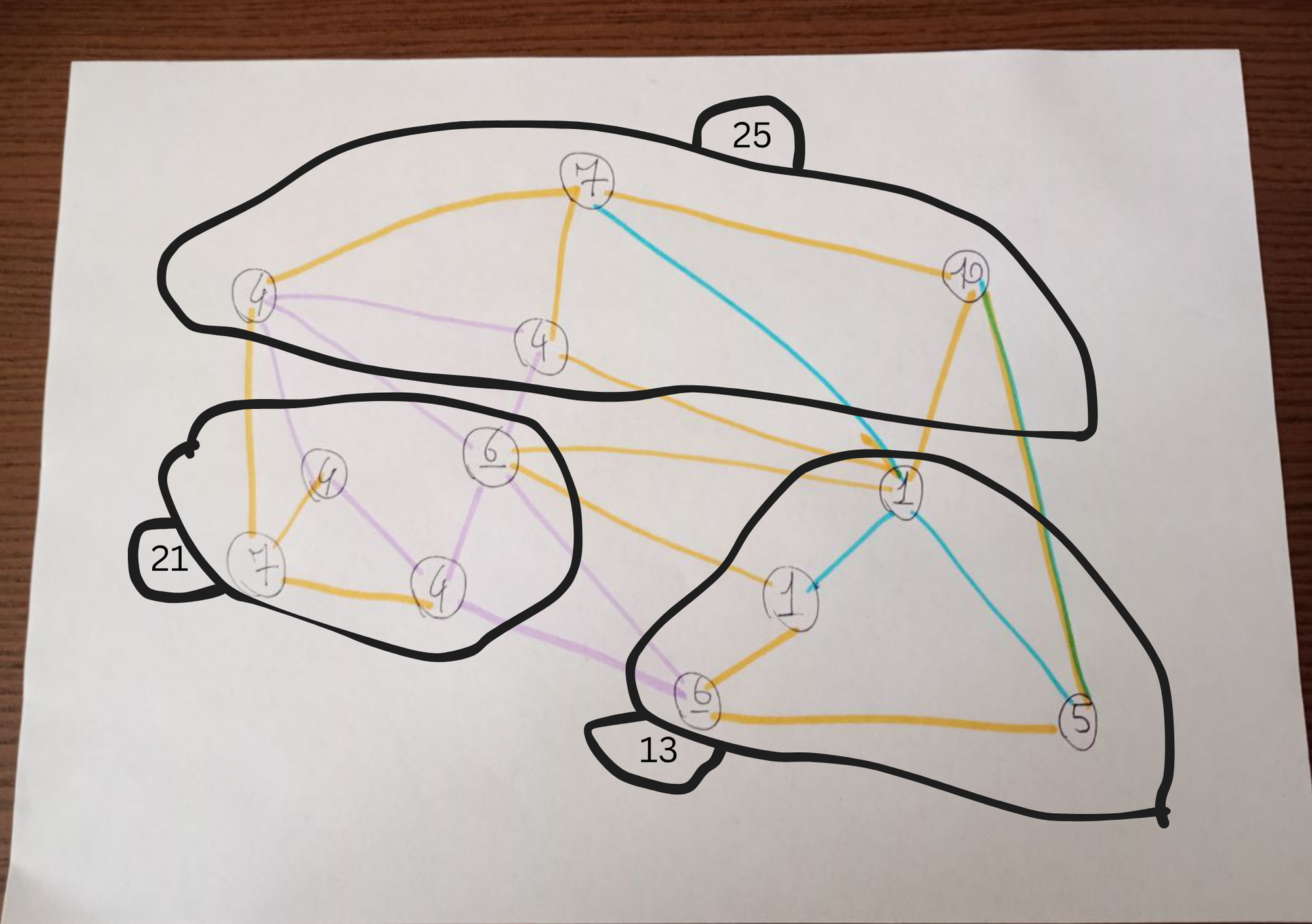
At this point, so much time has passed that I’ve lost the original sheet, so I’m editing the last picture I have with Canva.
We’re nearly the end of the post, since once the groups are created, we’ll have to introduce the PCs - which is enough of a procedure to warrant a separate post. The two rules you have to keep in mind are:
- at least one group per PC
- at least 4 or 5 members per group
Those two rules can get in conflict with each other, depending on the amount of PCs and NPCs you have at your table. It happens rarely, but it can happen. My rules of thumb are:
- sometimes, turning the sheet or changing your position helps identifying better groups (this is also a good reason why you should involve all the people around the table in this phase)
- even with less than 3 players, I try to go for at least 3 groups because it’s more fun
- if there are more than five PCs, there’s no need to actually have more than five groups
- groups with 3 members are an acceptable exception if dice clustering really hates you
My first instinct here was to split the sheet into only two groups, on the left-right axis. As you can see, the clustering here encourages it, and the relationships make some sense. But we’re assuming 3 players, so I needed that many groups. I didn’t think of filming it (nor would have known how to do it), but what I did was actually turn my tabled around a couple of times, trying to see if another angle made different groups make sense. In the end, I found this configuration to make some sense. Why? Learning to spot a good configuration requires some times but these are the pros I see here:
- We have a good chunk of inter-group relationships, which override the group politics (since all groups have odd power, they’re all hostile to each other). This opens up interesting venues for cooperation and/or betrayal. The evens being so split means they have good chances of becoming some kind of inter-group cabal or governance group.
- Any one of the big groups could easily crush the smaller one, but no big group could fight alone against the other two. This means there is some kind of forced truce or deal in place which could go in every direction if broken.
- Group members aren’t too cozy with each other, which opens up more space for resentment and political machinations.
It has also some downsides, namely that the weakest group also houses the two weakest NPCs of the city, while its most powerful members are just mediocre for the other groups’ power level. This could turn into an interesting hook, but it also paints a huge target on the whole group. Personally, I don’t like to start the game with such an obvious target already on the board, but the fun of TTRPGs relies in letting yourself be surprised by whatever comes up from the table[7], so we’ll make do.
There are still many ways to get a good configuration here and you don’t need to find the best one. The start of your game will also mean stuff is going to change, which is something you’ll have to embrace. Just find a good base which gives you:
- some alliances
- some enmities
- personal relationships going against group relationships
- enough groups to give all your PCs some connections
Detailing the groups
The group detailing procedure gives us little leeway, but it still requires some calls from the GM (or the table as a whole). The first step is roll the group type for each group. If you actually have one group per player, you can ask them to roll the dice for each group[8]. In this case, I’ll do everything.
The first group is the one with 25 power. I roll a 53:
The Mob. Roles: Autocrat, Whip.
To save time, I just annotate the group type on the map, and the type and roles on the kinship recap sheet. Since multiple kinship types can have the same role, I prefer to do all the rolls right now and then move to the role selection. The second group is the one with 13 power and they get a 64:
Sport hunters of the long pig[9]. Roles: Gatekeeper, Treasurer.
This place already looks lovely! Third, the last group, with power 21. A 62 gets them:
Utopian dreamers of a far-flung future. Roles: Seer, Outsider.
What I usually do for sake of brevity is to go alphabetically through the list of roles and select the NPCs for any role that applies, no matter which group. So if, say, we had two Autocrats in two different groups, I’d first select them, then move to the next role. In this post, for the sake of clarity, I’ll go group by group.
The Mob
The Autocrat is pretty easy, just pick the highest number: the only 10 in the map. I mark them on the map and on the recap sheet. Now I want them to have some personality, so I roll on the Sycophants table and get a 1: copycats. So our boss is some kind of criminal vampire who’s always followed by people dressed like them. I’m still working them out in my mind (for example, I’m still vague about their gender), but this is enough to have an idea. I could detail them more using the tables on the manual, but I try to not do it right now: the Whip might give me more informations about this Autocrat.
Our Autocrat could be a great Whip too, but I don’t like overlaps unless I really need them and here we have another character fitting the bill, our not-so-beloved 7. Again, I try to detail this vampire by seeing what kind of followers they have and in this case the Clerks are Sex Workers. It ties pretty well on the whole organized crime thing and, along with the bad relationship with the Autocrat gives me some ideas: the Autocrat is most likely conservative and doesn’t like those “fallen people”, while the Whip is more open-minded, even if it’s just in their choice of victims.
While I don’t want to detail the NPCs too much right now, we can add some more detail to their kinship. The first thing to do is find out which Nefarious Plan they’re working on. The roll says 3: Summoning of major demon. They’re the most powerful group, so the most obvious reason for them to do it is to consolidate their power further - crushing the utopians, their closest enemy. Now, they also look pretty evil motherfuckers, so I’m going to add a couple of customs to them by rolling on that table. This is not something I do all the times, especially at this stage but we have all to gain (more detail to start) and the usual issue with this (taking to long to start the game) don’t apply. Let’s get two:
- (26) Communal living: a safe, shared haven is provided to all members of the group. They may or may not be expected to use it exclusively.
- (16) Food restrictions: the group’s members are forbidden to drink certain kinds of blood
These make for an interesting kinship. They are organized crime, want to summon demons, live together and are picky with their food. I know there are a lot of different crime organizations which might fit the bill, but I’m Italian so let’s keep it close to what I know: mafia. This gives us something more to build on for our character, the Autocrat is pretty clearly our boss, who now I imagine dressed in classic mafia movie fashion…only, I’ve recently watched Mafia Mamma[10], so she’s an accomplished, traditional-minded crimewoman, whose copycats are the wives of her underlings. That probably explains her dislike for the Whip - who now I imagine as an uppity man with a strong opinion on a woman’s role in the crime family. They have a place where they live somewhat together - I’m thinking of a big apartment complex, maybe a whole neighbourhood - and don’t drink blood from their human associate. Done!
Sport hunters of the long pig
The Gatekeeper here is though. The group is too small to actually have members without external connections. The lowest we can get is 1, which gives us two candidates, a 5 and a 1. In this case I also consider placement - it’s a personal preference and you can find any other metric, but it makes visual sense to me. Since the 1 is closer to the border with two groups, while the 5 is near the end of the map, the latter looks more “disconnected” from the outside world, if you get what I mean. The 1 would work as well, but it wouldn’t look as right to me[11]. So we mark the 5 as a Gatekeeper and roll for their followers: yesmen. Again, I only have a faint impression, but an aloof and disconnected Gatekeeper attended to by a bunch of yesmen to me reeks of some evil rich industrial guy from the 1800s. Following your insticts is as good as rolling, so I think our Gatekeeper is most likely a chauvinistic fuck. And, obviously, a man.
The Treasurer is an easy pick: there’s only one person in the kinship who has a good relationship with our Gatekeeper, which is our 6. They are slightly more powerful and have a swats of interns as their money counters. It may be the influence from Jumanji, but I always felt the sport hunters were a bit of a rich men’s club. To have a good relationship with the Gatekeeper, this vampire probably shares their love for money and not only their utter despite for everyone else’s (un)life, so I’m going for a Yuppie. Since I can’t really see this bunch of bastards considering women as their peers, the Treasurer is going to be a man too.
Although they’re the smallest fish in this particular pond, they still have a plan. The table tells us it’s “(4) Character assassination”. There are two possible targets here: the Mob’s Whip, already disliked by his boss, and the Utopian’s Outsider. Anyone will be good, but it’s better to have the plan’s target firmly in mind before starting the game. The Outsider is too obvious as a target, so I’m going to pick the Whip. The plan is fairly simple: a good, old sexual scandal, showing a clandestine relationship between the Mob’s Whip and a yet unnamed NPC from the Utopians. The whole thing of the Sport Hunters feels already pretty detailed, especially for a group this small, so I’m not adding customs here. Maybe I’ll flesh them out later - most likely during character creation - but for now that’s enough.
Utopian dreamers of a far-flung future.
The closest thing we’ll get to the good guys need a Seer to make plans and an Outsider to bully and kick out when things go south. The Seer is pretty easy, we have a 6 with more outside than inside connections which fits the bill perfectly. They have a bunch of indentured workers as their slaves. I’m not seeing much in terms of identity here, so I’ll postpone more details to later but I rolled on the Styles table for the Outsider, so I’m going to travel back in time and do it for the Seer too. We got “(21) Punk Rock”.
The perfect candidate for our Outsider is the 7 sitting at the kinship’s corner. Their Punks are underground musicians. I’m seeing this Vampire as part of a scene, maybe they own a place where people play music. In this case, I want to know what kind of scene we’re talking about, so I’m resorting to the Styles table: (41) 90s Norwegian Black Metal. This kinship looks pretty musical.
This rock band turned anarchists needs something to do with their power. The table says it’s “(6) Data Exfiltration”. They want to steal some information from another kinship. The most obvious target is the Mob. They look like the kind of people who have ledgers with interesting stuff… and we established one of them has a scandalous relationship with a member of this group. Could be a leverage. I’m feeling a bit of fatigue right now, so I’ll not roll for customs. Again, this can be added during character creation, if needed, and whenever I simply forgot to do it the game worked anyways, so no pressure.
Right now the map looks like this:
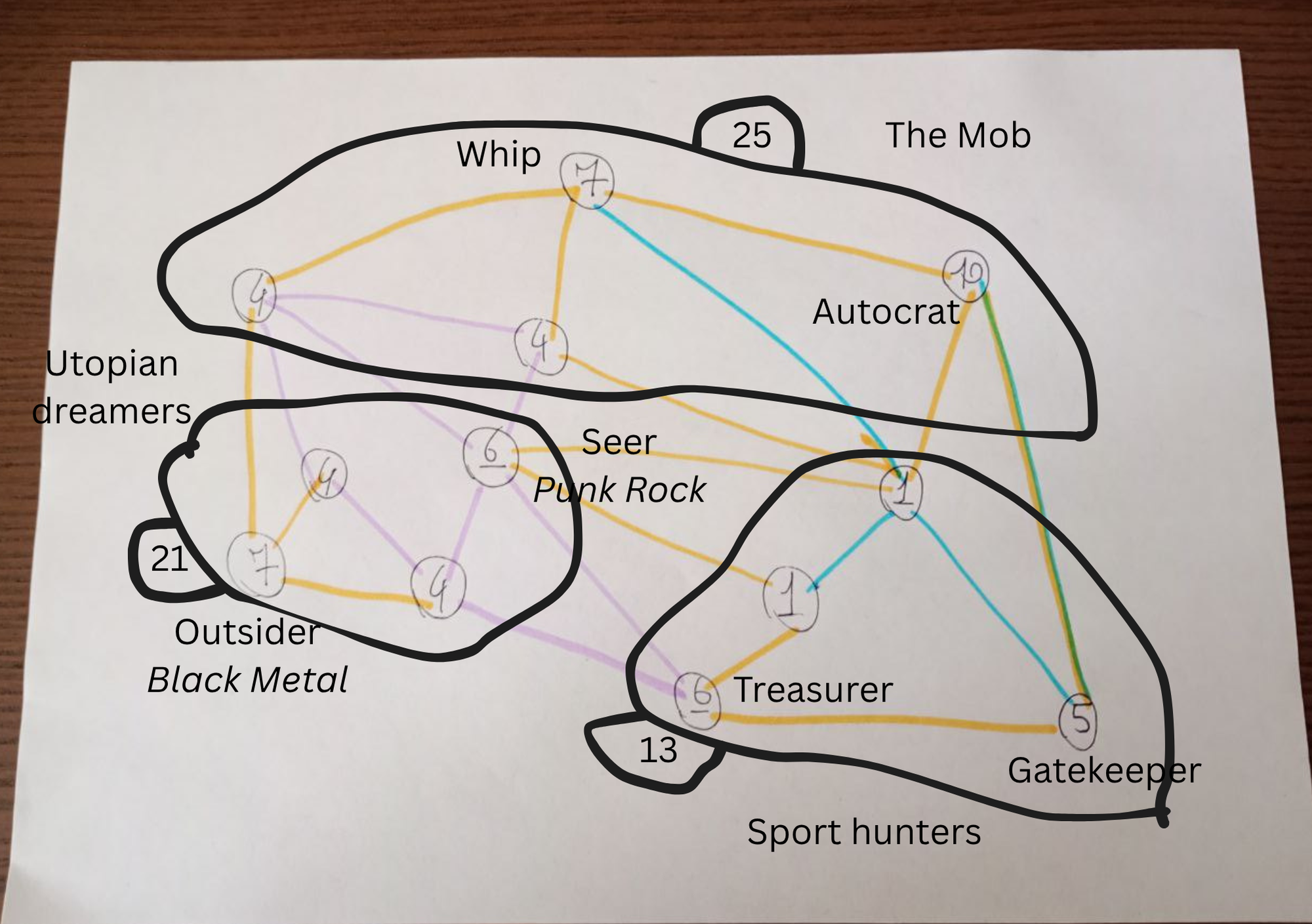
Our city has three powerful groups, each one plotting to gain power over the others. Their plans are in motion, but something, the Incident, will interfere with them. The PCs might use these chaos to their own advantage. Some parts of this background are pretty detailed, while others are more vague - there’s still some set up to do to flesh out those parts, but some stuff can remain vague until needed, if it is actually needed. What you need to avoid is changing what you established: we decide who the leaders of each kinships are, so we won’t change them, but we didn’t decide their names or who the other NPCs are. Those details can be fixed once we need them - or maybe they’ll remain vague for the rest of the game.
As you can see, I annotated the map with the public informations (relationships, groups, roles…) but not the secrets (like the plans). As it’s pointed out in the manual, doing this helps the game run smoothly. During the game I also update the map with whatever change the PCs know (most likely because they caused it). If you want to take a look at a real map, this is from mid-game during one of the playtests:
Group creation rules changed from when the picture was taken, but it should give you an idea.
It took me more than two months to finish this post, so I’m not making any promises as when (or if) the next one will show up. Anyways, I hope this extended example shows you how I play this game and helps you find out how you will play it.
Yes, I’m aware I’m hosting that blog on my domain. I just forget to read it, ok? ↩︎
The most detailed is probably in this thread but searching “fanx” in the same forum will yield a bunch of other results. ↩︎
I started writing the post in May, but then got sidetracked and in the meantime other people asked similar questions. This post is for all of you. ↩︎
and ( c ) I’ve started writing FanX in English because I’m more familiar with the English version of Vampire slang and I was too lazy to translate it. This also applies here. ↩︎
Since I’ve started playing FanX at conventions I bought a MÅLA from Ikea. ↩︎
“I’ve run out of X so we’ll use something else” is a key element of FanX’s culture, okay? ↩︎
Basically the opposite of having dinner at a sketchy restaurant ↩︎
Having the players sit down and just watch as you prepare the map is a great way to lose both their attention and a lot of valuable insights. Try to keep them involved, both by asking them questions and having them do stuff as much as your setup allows it. ↩︎
Since some people asked what’s the “long pig”: man. If someone offers you a long pig pie, get the fuck away. ↩︎
Which is so offensively inaccurate I laughed most of the time ↩︎
When this happens at a table with more people, I usually ask their opinion on those matters. ↩︎